Bird Conservation Nepal
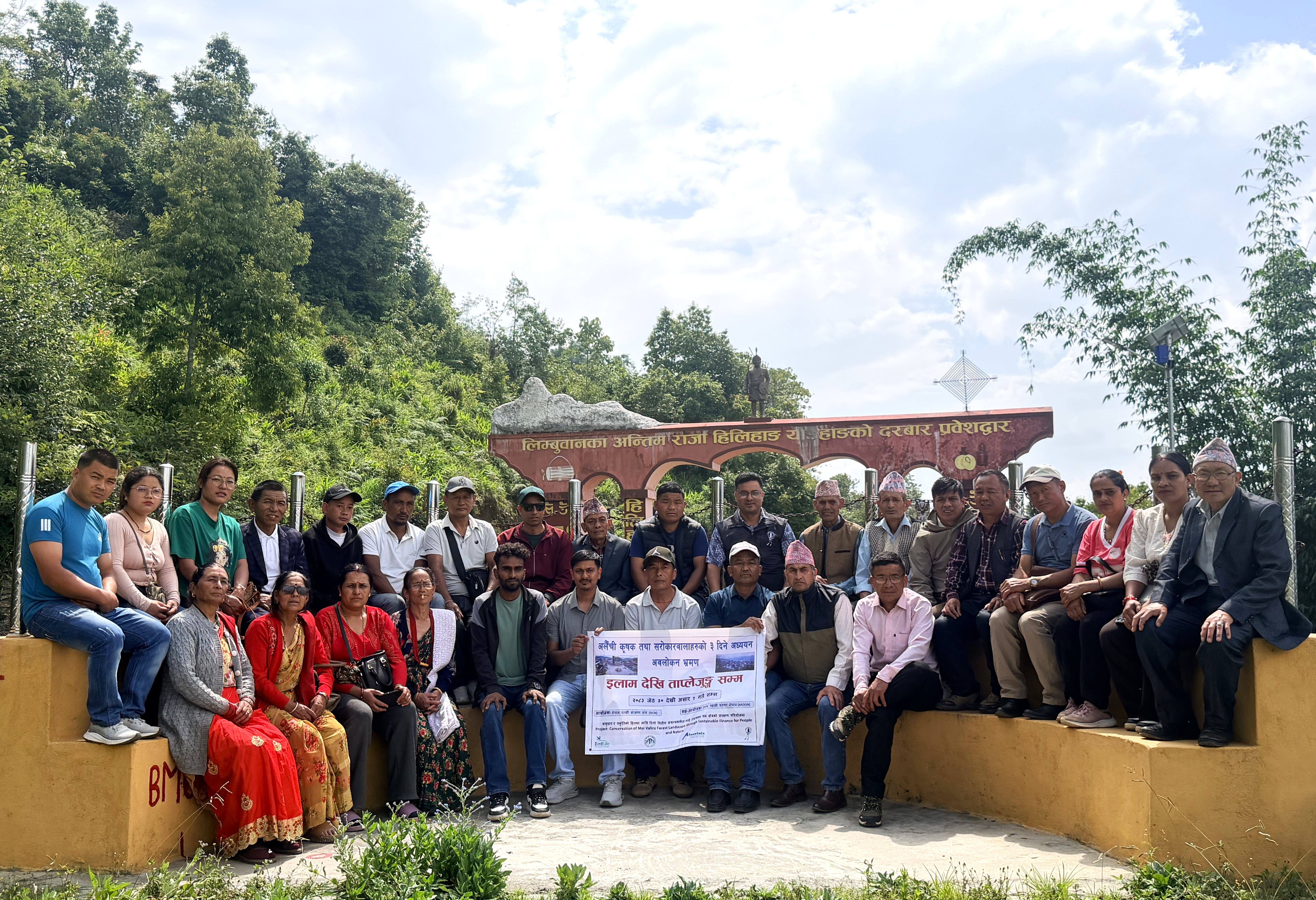
(BCN) organized an exposure visit for Cardamom farmers and project stakeholders
of Sandakpur rural municipality (Ilam) to Taplejung District from 13 to 15 June
2026 to observe and learn about cardamom farming practices in the district. This
event was carried out under the project "Conservation of Mai Valley Forest
Landscape through Sustainable Finance for People and Nature," supported by
BirdLife International.
A total of 29
participants took part in the exposure visit, including 24 cardamom farmers
from three farmer groups - Maipokhari Wood Snipe Cardamom Farmer Group,
Sulubung Wood Snipe Cardamom Farmer Group, and Jamuna Wood Snipe Cardamom
Farmer Group - along with staff members from BCN and Mountain Organization
Nepal (MOON, Ilam).
On the first day, the
observation tour commenced from Ilam and concluded at Phungling, the district
headquarters of Taplejung. In the evening, participants attended a brief
meeting with Narendra Kumar Bista, an officer from the PMAMP Cardamom Zone,
Taplejung, who provided an overview of cardamom farming and the pocket area of
Cardamom in the district. He also explained the support provided to farmers
through the program and shared information about cardamom production and
marketing.
On the second day, the
participants visited cardamom farming area in Khejenim, Ward No. 2 of
Phaktanglung Rural Municipality. During the visit, Mr. Gopal Bhandari,
Agriculture Technician of the Rural Municipality, provided a detailed overview
of cardamom cultivation practices and shared insights into the local farming
system. The participants also visited one of the oldest and largest cardamom
farms in the area, where they observed a well-managed cardamom plantation. They
were particularly impressed by the scale and condition of the farm. During the
visit, they also interacted with a farmer who cultivates cardamom on 70 ropani
of land and produces more than 45 mann (approximately 1,800 kg) of dried
cardamom annually. He shared his experiences of cultivating cardamom in the
area over many years with the participants. In the evening, a short meeting
with Mr. Ramesh Rai, Program Coordinator of Himali Conservation Forum (Nepal
Bird Conservation Network member). He provided an overview of the
organization's conservation initiatives in the Taplejung area.
During the visit,
participants learned about sustainable cardamom farming practices, including
disease management without the use of pesticides and the importance of
selecting suitable cardamom varieties to achieve higher yields. They also
visited Chandan Fiber Udyog, an enterprise led by Maya Gurung, where
handicrafts are produced from cardamom fiber, a material that was previously
considered waste. The visit provided participants with valuable insights into
value addition and the utilization of cardamom by-products beyond the seeds,
inspiring them to explore similar opportunities in their own communities. The
exposure visit was highly inspiring and motivated the participants to adopt
improved cultivation practices, explore value-added products, and further
promote sustainable cardamom farming in their respective communities.

