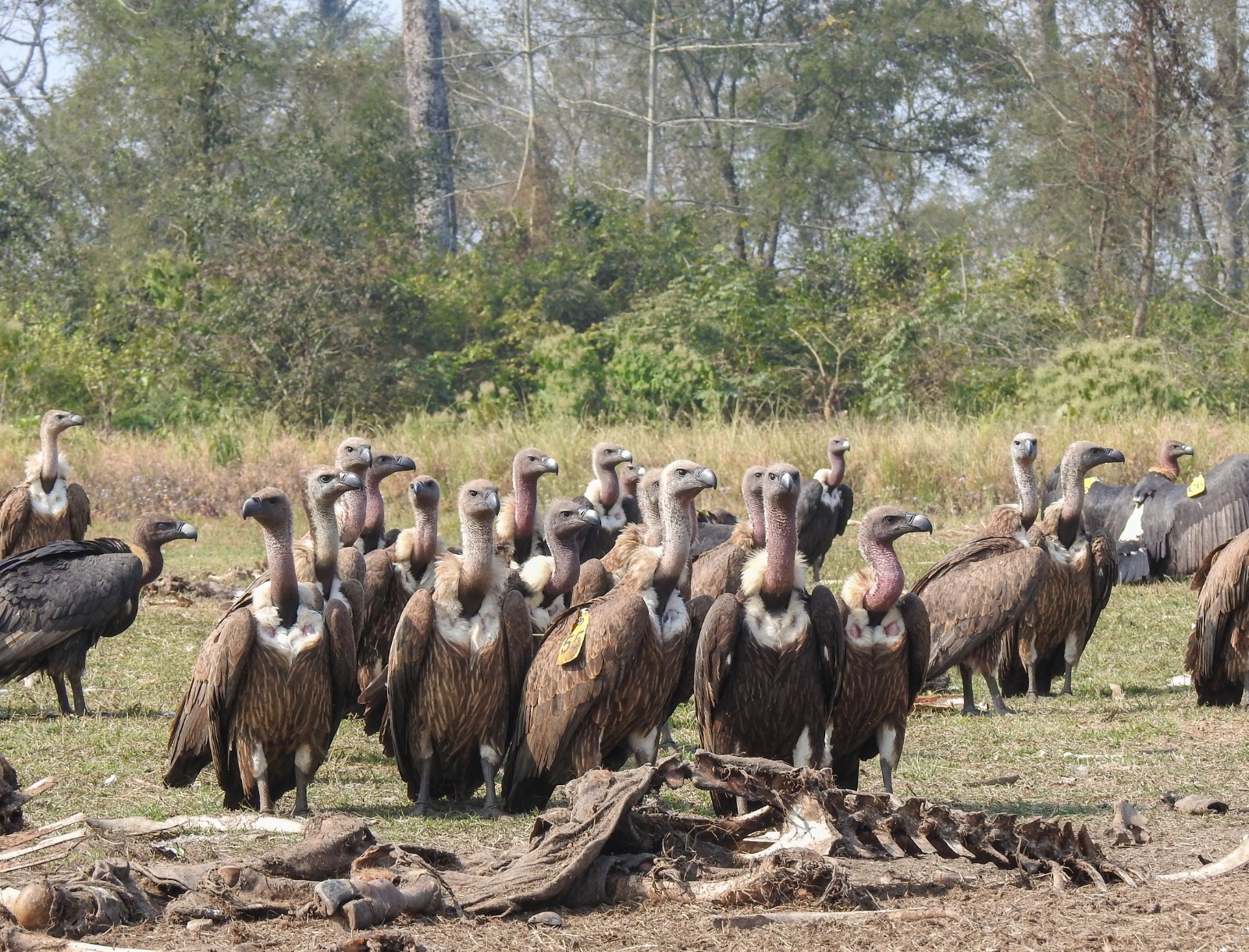
A rare conservation good news story is the subject of a paper
co-authored by Prof Rhys Green, published in the journal Ibis. The study
described examines the recovery of previously critically endangered vulture
species in Nepal.
Beginning in 1994, populations of three species of vultures
endemic to South Asia began a catastrophic population decline. Rates of decline
varied between 20% per year and 50% per year, depending on species and happened
simultaneously in several countries (India, Pakistan, Nepal, Bangladesh).
It took until 2004 to find the cause- veterinary use on
cattle for pain relief of the non-steroidal anti-inflammatory drug (NSAID)
diclofenac. Diclofenac causes kidney failure and death within 2 days when
vultures feed on the carcass of a recently-treated cow. One of the vulture
species was suffering an annual death rate of 40% per year from diclofenac
poisoning when the decline was at its most rapid.
Governments banned veterinary use of the drug in 2006. Monitoring showed that its use declined after the ban, but there was no enforcement, so it didn’t decrease to zero everywhere and remained high in some places. Also, some other toxic NSAIDs that were not banned partly replaced diclofenac.
Consequently, vulture declines stopped in most places, but the
much-reduced populations did not recover significantly.
The exception is Nepal, where rare teamwork between
government agencies and a conservation NGO (Bird Conservation Nepal, Nepal
partner of BirdLife International) raised awareness among vets, livestock
keepers, pharmacists and the public so that diclofenac ceased to be available
in Nepal in 2012.
The area was then declared to be the only “Vulture Safe Zone”
in South Asia by the international vulture conservation organisation
SAVE. In that year, population monitoring data showed a sudden switch
from rapid long-term decline to rapid and sustained increase.
The new paper investigates the changes in demography
underlying the increase by measuring annual survival rates of adult and
immature vultures and their breeding success. The remarkable high rate of
increase since 2012 (13% per year) has occurred principally because of
unusually good survival rates of both immature (96% survive from one year to
the next) and adult (95% survival) vultures, sustained over a period of more
than ten years. This has happened because vultures are no longer poisoned by
diclofenac in Nepal and the huge reduction in their numbers meant that there
was less competition than formerly for food and nest sites.
The study gives reasons to hope that recovery of currently stable but low vulture populations elsewhere in the region can be achieved if effective ways can be found to prevent the use of toxic NSAIDs.
Read the paper:
Mallord, J. W., Joshi, A. B., Chaudhary, I. P., Thakur, D.
C., Thapa, I., Bhusal, K. P., Rana, D. B., Dhakal, B. K., Galligan, T. H.,
& Green, R. E. (2026). Continued
population recovery and high annual survival rates of White-rumped Vultures in
Nepal. Ibis. https://doi.org/10.1111/ibi.70094
This story was originally published on the Department of Zoology's website on 14 August 2026: https://www.zoo.cam.ac.uk/news/how-nepals-vultures-made-remarkable-recovery

